Ask Michaela: Why Can I Squirt During Masturbation but Not With a Partner?
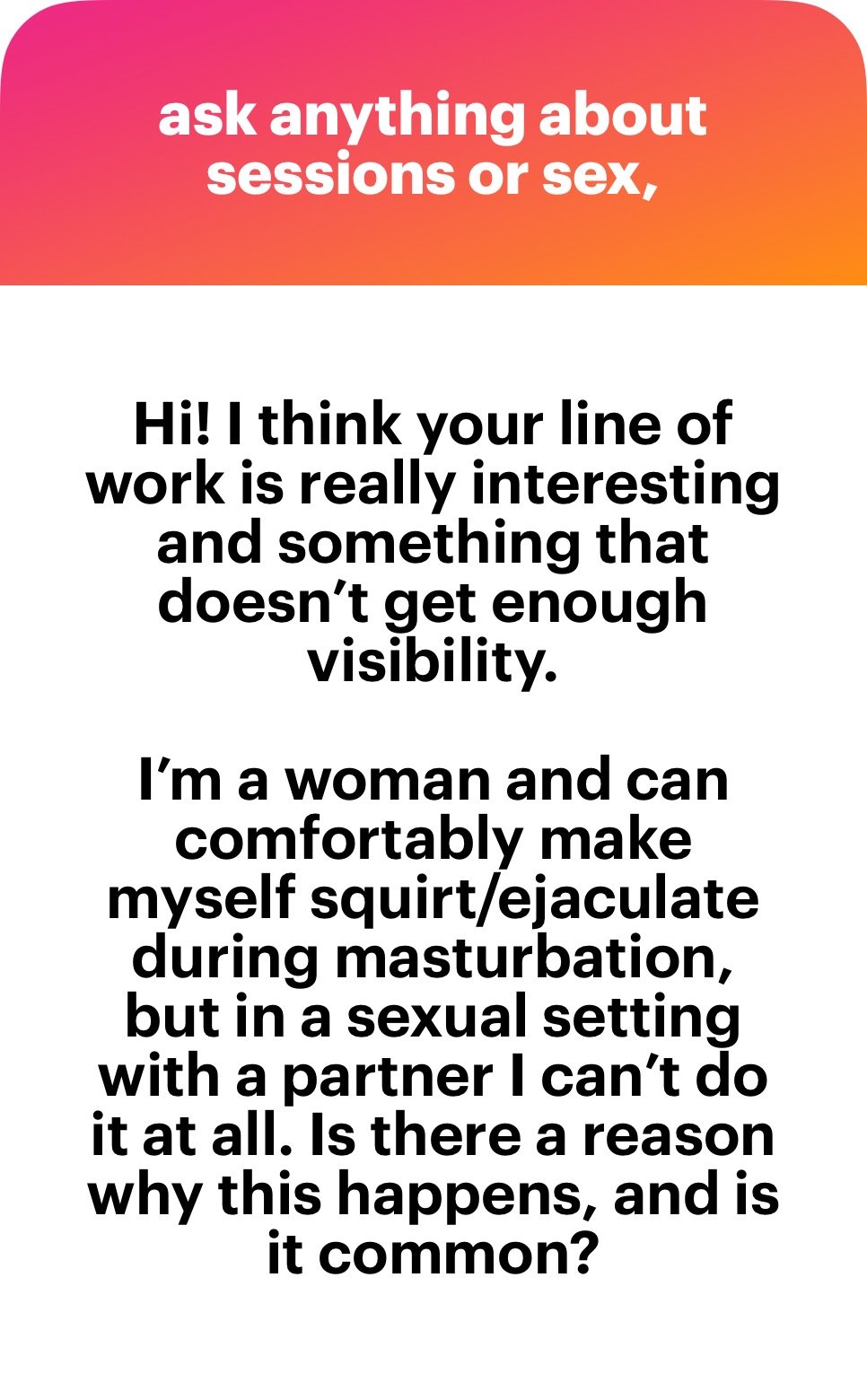
Hey lovely! Thank you so much for reaching out with this question and for your kind words about my work. I completely agree that this line of work is so interesting, and I really wish there was more visibility around sex, intimacy, masturbation, and relationships instead of it all being treated as taboo, especially for women. As a sex coach, my mission is to help as many men, women and couples as possible find their way to satisfying sex, pleasure, and connection.
While I will do my best to answer your question, this post will contain general education. So I can best help you, I would suggest booking a 1:1 coaching session so that we can look into the specifics.
To the readers: If you have your own burning question that you would like me to answer here on the blog, you can ask it anonymously through the Ask Michaela feature. If you want to receive the answers to these Ask Michaela questions straight in your inbox, you can sign up for the newsletter.
First, Let’s Celebrate
Firstly, I want to congratulate you on being comfortable with squirting/ejaculating during solo play. Masturbation (for both vulva and penis owners) is a great way to learn about ourselves and what pleases us, and that release you are describing takes both relaxation and a deep connection with yourself. It may surprise you to know that your experience may be rarer than you think! Studies show that only 10% to 54% of women ever experience ejaculation in their lifetime. Knowing you have access to that type of pleasure is already a win and a good foundation to work with.
Curious Clues
Once I received this question in my inbox, my mind as a somatic sex coach was buzzing with curiosity. I'm curious about how you achieve this release during your solo sessions, including the specific types of touch, pressure, and mental stimuli you use. It would also be interesting to explore whether you are actively trying to replicate those same physical movements and techniques when you are with a partner. Exploring these details is often the first step to understanding how we can work to bridge the gap between your solo and partnered pleasure.
The shift between solo and partnered sex
Experiencing a shift in pleasure when moving from solo sex to partnered sex is a normal and common experience. In fact, this specific challenge is brought into my Zoom coaching sessions by clients of all backgrounds. When it comes down to it, there are two main reasons why achieving this level of release can be more challenging with a partner than on your own. Understanding these core obstacles allows us to remove the self-blame and address the roots of the issue.
Emotional Safety
Orgasm, squirting and ejaculation all require physical and emotional surrender. When you are alone, you are in a controlled environment with no external judgment or pressure. The moment someone else enters the room, a new layer of vulnerability and expectations is added. It’s important to note that you may feel in love, supported and safe with your partner, but your nervous system may be working through past experiences or old conditioning.
Several common behavioural patterns can put you in your head and out of your body when emotional safety isn’t present. One of these patterns is spectatoring, which is where we are worried about how our partner is perceiving our looks, what we sound like, or what we smell like. Additionally, as women, we often feel the need to take care of others, which leads to us feeling responsible for our partner's pleasure instead of letting them hold that responsibility themselves. Finally, women in heterosexual relationships often do a mental time and energy equation, generating thoughts like "I think I’m taking too long" because it naturally takes more time than a male partner to reach orgasm. When any of these thoughts take over, they disrupt your presence and cause you to put your own pleasure on the back seat.
Having a set Pleasure Pathway
Solo sex and partnered sex are two distinct experiences that require different things from your body. A lot of women experience masturbation differently from how they experience partnered sex, as their solo technique may involve specific angles, porn or smut, pacing, toys, or internal fantasies which aren't present during partnered sex. This specific combination builds your set pleasure pathway, meaning the exact routine, pressure, and mental conditions that your body knows will lead to release. When you are with a partner, that specific routine is disrupted by their movements and presence. If you aren't actively replicating or expanding those specific elements during partnered sex, your body won't recognise the cues it needs to reach the climax. Learning to bring your solo experiences into your partnered connection is a practice of expanding what your body knows to be pleasurable.
Loving these Ask Michaela deep-dives?
Get honest intimacy insights, anatomical breakdowns, and real-talk Q&A columns delivered directly to your inbox


Want to ask a Sex Coach your own question?
Ready to bridge the gap between solo & partnered pleasure?
Stop overthinking in bed. In a 1:1 Foundation Session, we'll map out your goals to move forward with creating new pleasure pathways and build somatic safety so you can fully surrender with a partner.