Ask Michaela: Is there such a thing as “too much” masturbation?
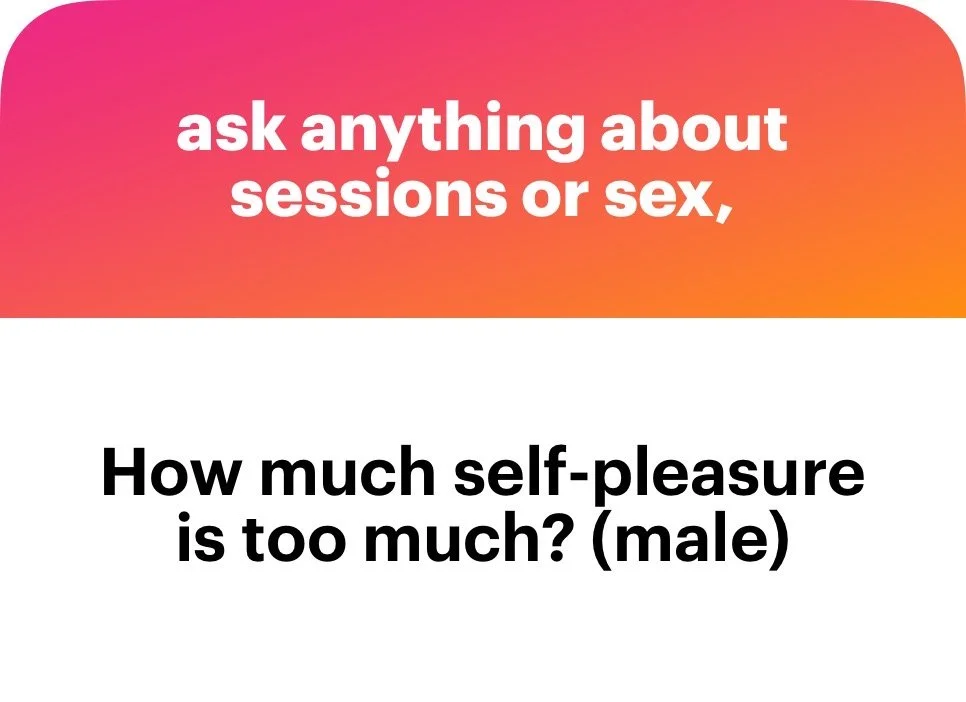
A big thank you to the person who wrote this question. I will be presuming that by self-pleasure, you mean masturbation while answering the question.
If you have a question of your own, you are welcome to ask it anonymously through the Ask Michaela feature. To get these answers sent straight to your inbox, sign up for the newsletter.
Long story short, there is no clinical definition or arbitrary number that says a certain frequency of masturbation is “too much”.
Your body is remarkably good at communicating its physical boundaries. It will signal when it is time to slow down through symptoms like exhaustion, soreness, chafing, or temporary desensitisation. When those physical cues pop up, the best response is to listen to your body and give it time to rest.
However, when clients explore this topic in my 1:1 coaching sessions, we usually discover that their primary concern isn't actually about physical frequency. Instead, they are often trying to navigate complex feelings of guilt or shame, or worrying that their habits are somehow affecting their performance or partnered relationships.
Here is a look at what recent research tells us about how certain habits can impact sexual function, alongside the benefits of a healthy self-pleasure practice.

When Self-Pleasure Habits Become Counterproductive
While self-pleasure does not damage your physical health, certain behavioural patterns and mindset blocks can begin to interfere with your sexual well-being or partnered intimacy.
When you only have one limited pleasure pathway
If you have a set routine that involves high intensity or highly specific techniques, you are conditioning your nervous system to respond to a narrow set of sensations. Common ways this shows up are when people with penises use extreme pressure, fast friction, or specific angles to reach ejaculation or pleasure. While it is good to know what gives your body pleasure, these dynamics can become difficult to replicate during partnered sex, which can lead to delayed ejaculation (difficulty reaching climax) or performance anxiety.
When you are always in a rush to finish
Rushing through self-pleasure can train your body to climax quickly. When people routinely hurry to avoid getting caught or to fit self-pleasure into a busy schedule, the body learns a fast-paced sexual response loop. Over time, this fast reflex can carry over into partnered intimacy as premature ejaculation.
When you become too reliant on visual stimuli
Heavily relying on porn, other high-stimulation media, or fantasy during masturbation practices can create a disconnect with being able to have sex with a real-world partner. When internal visual scenarios differ drastically from realistic partnered connection, it can make it harder for your mind and body to stay engaged during interpersonal sex.
When you have performance pressure and internalised shame surrounding masturbation practices
Believing that self-pleasure is "harmful," "dirty," or morally wrong creates mental stress. This performance anxiety disrupts natural bodily reflexes, which can manifest as psychogenic erectile difficulties or low libido. In many cases, the anxiety and guilt surrounding the act cause far more distress than the physical act itself.
The Positive side of Self-pleasure
When approached with self-compassion, balance, and awareness, self-pleasure serves several vital roles in overall health and well-being:
Sexual Self-Discovery
Masturbation provides a safe and pressure-free space to explore your anatomy, preferences, desires, and pleasure responses.
Stress and Tension Relief
It acts as a natural release, offering anti-anxiety benefits, elevating mood, and encouraging deep physical relaxation.
A healthy independent outlet
It serves as a fulfilling way to release sexual energy when you aren't in a relationship or are physically separated from your partner. Additionally, mutual masturbation is a great way to show your partner what you like.
Therapeutic and Coaching Application
Somatic sex coaches (like me), sexologists, and sex therapists often prescribe targeted self-pleasure exercises as homework between sessions to help clients reconnect with their bodies, build confidence, and resolve specific sexual challenges.
Ready To Transform Your Relationship With Self-Pleasure?
If you feel like your solo habits are causing frustration in your partnered sex life, or if you are carrying anxiety and guilt around your routines, you don't have to navigate it alone.
In a Foundation Session, we create a safe, judgment-free space to explore your unique patterns, rewire unwanted physical responses, and build a practice that boosts your confidence and connection.
Explore how coaching works for your specific journey:
For Penis Owners: Learn how to overcome performance pressure, address rapid or delayed ejaculation, move past erectile difficulties, and recondition your physical responses.
For Vulva Owners- Discover ways to reconnect with your body, overcome pleasure blocks, and build deep, shame-free arousal.
For Couples: Navigate mismatched desires, bridge communication gaps, and bring shared pleasure back into your partnership.